28 | KEITH CURLE IS AN ALBION FAN…
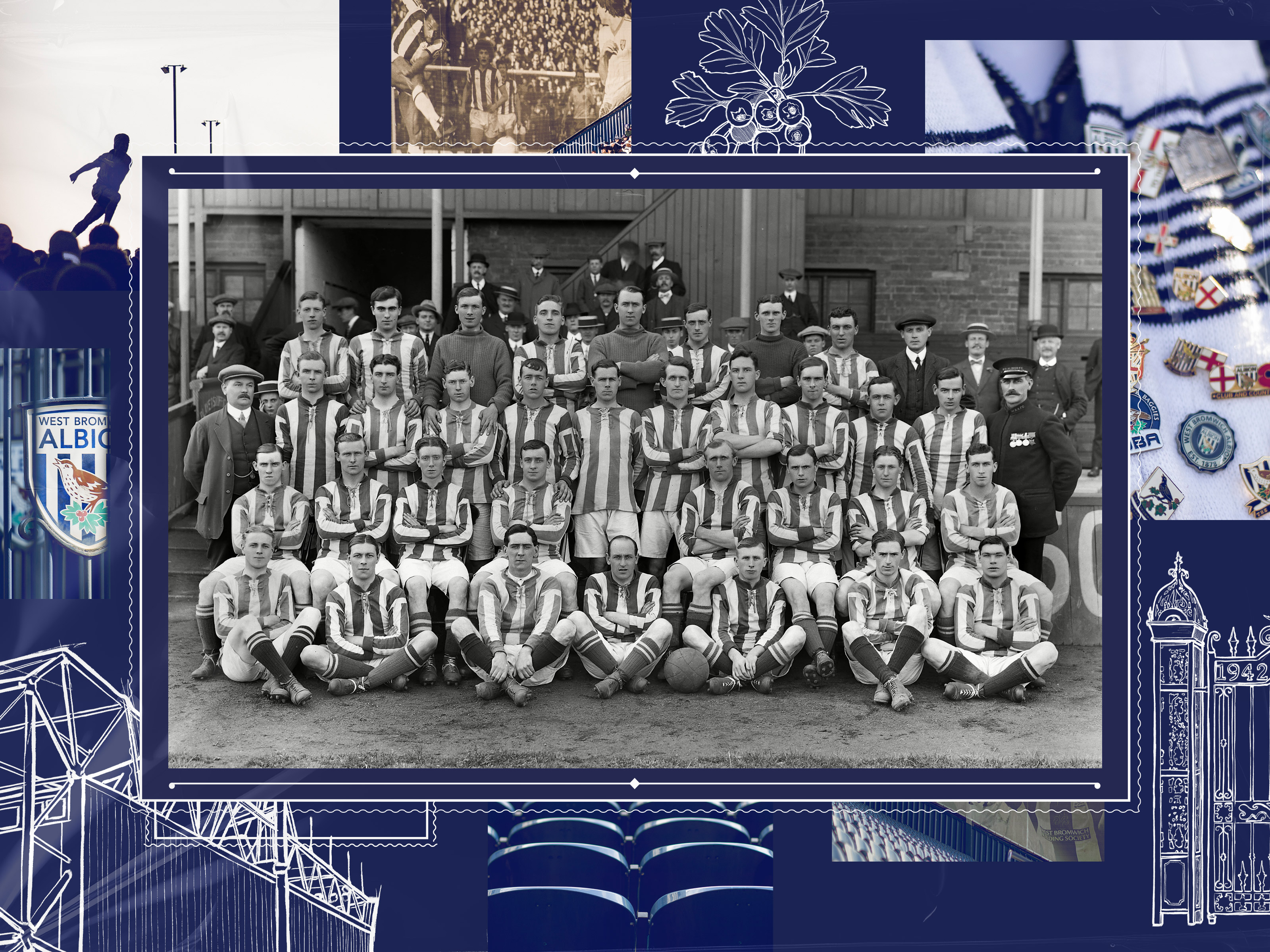
Owing your own home is a great thing, but it’s much nicer if you own the ground underneath it as well. After the move to The Hawthorns, the Albion didn’t enjoy that luxury, but a return to the top-flight in 1910/11 started to get the club thinking that the time might be right to stop leasing that land and buy it outright.
The Hawthorns posted its first crowd of over 40,000 when Aston Villa visited at the end of September 1911 – 46,203 were in the ground for the 2-2 draw. Adding to the general feelgood factor, Albion went on an FA Cup run that eventually encompassed eight games and a replayed final. Sadly the Baggies were defeated in the final minute of extra-time of that replay by Barnsley, but there was financial consolation by way of a breathtaking cheque for £4,007 for our participation in the semi-final and final ties.
That allowed for a very significant discussion to take place at board level on May 7th 1912: “Resolved that we communicate with the Charman of the Sandwell Park Colliery Co, asking their price for the freehold of the ground.” They responded by saying that they were willing to sell the freehold, and the cottages between The Hawthorns and the Woodman, but that we needed to make them an offer they couldn’t refuse. Our first stab was £150 per acre for a site of just under 10 acres.
Negotiations with Sandwell Park Colliery progressed slowly, and so in February 1913, the directors openly discussed the idea of moving away from The Hawthorns and building a new ground elsewhere. How seriously they meant this, or whether it was simply a ploy to hurry matters along is unclear, but given that the Club were also meeting with West Bromwich Corporation and the Great Western Railway to discuss the feasibility of a station being constructed in Halfords Lane, the latter looks the more likely at that stage. In May, Sandwell Park Colliery responded by refusing to extend the lease on the land any further than 1921 and informed the directors that it would take £8,000 to buy the freehold of the land, rather more substantial than Albion’s original offer of around £1,500.
This put a rocket under the board, who approached the Earl of Dartmouth about a 12 acre site directly opposite The Hawthorns, running from Park Lane to the Birmingham Road. That was ours for the princely sum of £3,600. By the end of the month, Sandwell Park Colliery were asking for £6,000. At a board meeting on June 17th 1913, Billy Bassett was able to report that the Club had completed the purchase of the freehold of the ground for the sum of £5,350. That might just be the single most important moment in the history of West Bromwich Albion.
Taking ownership of The Hawthorns not only meant the club finally had a permanent home, but that there were no longer any philosophical brakes on making any improvements. This was Albion’s house now, and we could do what we liked.