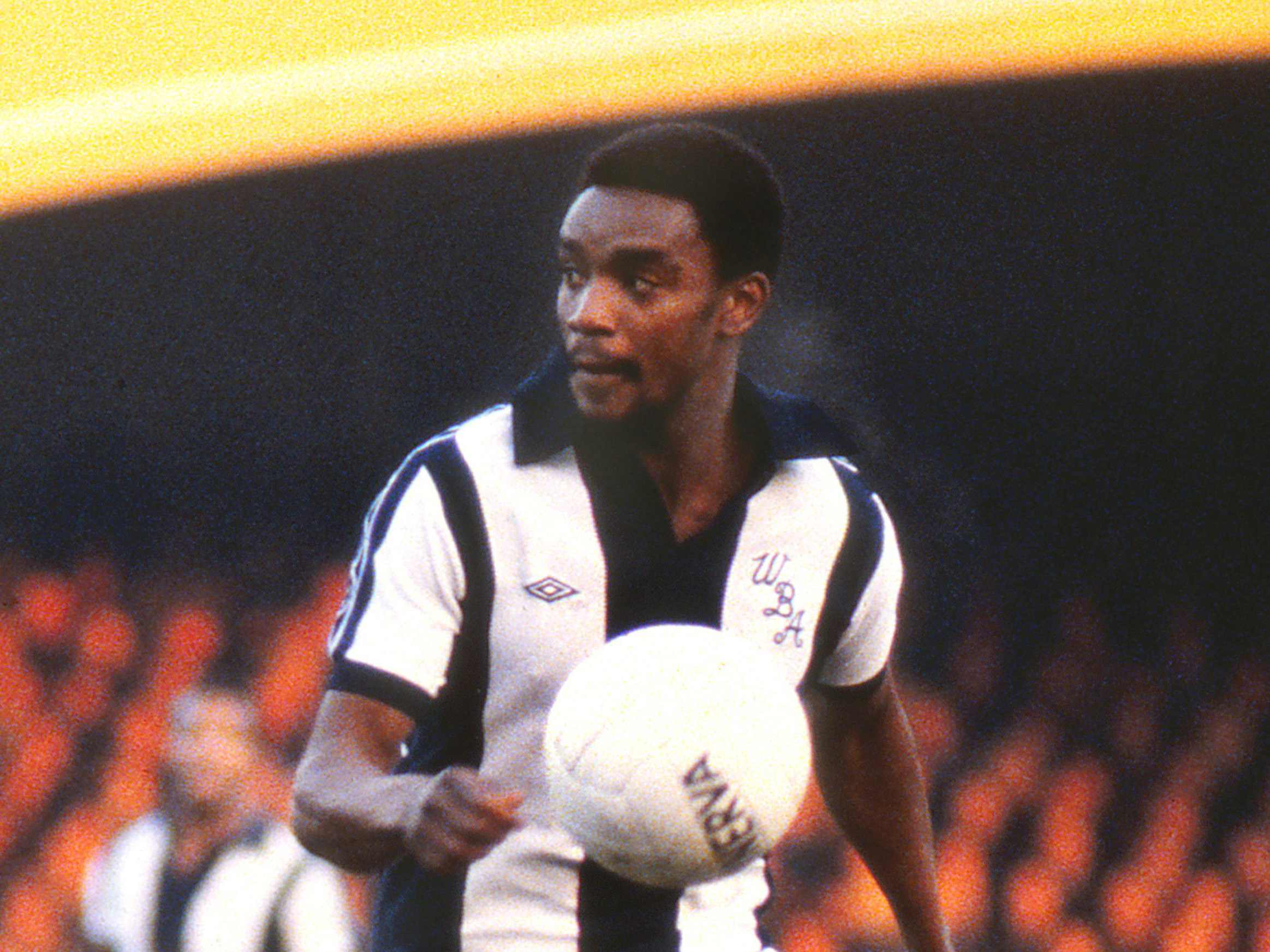
The more that the years go by, it seems the more that the fella that’s driving time’s winged chariot is sticking his foot down, dashing through the gears, and generally is in too much of a hurry to get to wherever it is that he’s going. Weeks blur into months, months into years and before you know it, you don’t know what day it is – after all, it was only 2008 last week, wasn’t it? But to those of us of a certain age, the realisation that March 8th should have seen Laurie Cunningham reach his 70th birthday is like an alarm call from Big Ben.
Any thoughts of Laurie Cunningham are inevitably bittersweet, tinged with the sadness of his tragically premature death and with a hint of disappointment over the magnificent potential that went ultimately unfulfilled. Yet in barely a couple of years at The Hawthorns, Laurie filled more pages in the mental scrapbooks of those who watched him than dozens upon dozens of other perfectly worthy Albion, even international, stars. To see Laurie Cunningham in full flow was to see a sorcerer making the game of football look the easiest, most natural thing in the world.
Yet to see Laurie Cunningham in full flight back in 1978 was to unleash some of the most poisonous forces that football has ever harboured or been exposed to. Laurie’s greatness wasn’t simply founded in the fact that he had absolute mastery of the football, that he could do anything with it, at any speed he chose, that spellbound a raft of football goers up and down the country. His greatest achievement was to do all that even while he was the subject of vicious racial attacks, while he stood alone on a hostile touchline beneath a hail of bananas, while he could hear the massed ranks of opposition support chanting things that we cannot print. It was in a time when the authorities largely turned a blind eye. Games were certainly never halted as a protest against racism, even when thousands on the terraces were indulging in it.
Laurie’s greatness, like Cyrille’s, like Brendon’s, like Viv Anderson’s, like George Berry’s, was to go out on the field and face the cowardly, brain dead racists down. Call him what you liked, you weren’t going to stop Laurie ripping your team to shreds. The final solution? Sticking a goal past your white goalkeeper. Where’s your racial supremacy now?
Laurie pitched up at The Hawthorns in the tail end of Johnny Giles’ first spell as manager, coming up from Orient in a deal valued at around £110,000, a hefty sum for a young man who had only ever played in the lower leagues, yet Giles might as well have snuck him out of Brisbane Road slung over his shoulder in a bag marked swag, for it was a fee so risibly small that it bordered on grand larceny. As soon as Cunningham donned the stripes, his place in folklore was secure.
It’s hard to say just what his greatest contribution to the Albion and to the game really was, for his pioneering role in smashing racial barriers and stereotypes sometimes leads you to forget just what a genius he was – and that’s no mere hyperbole, for genius he really was – with the ball at his feet. But for all that football is the lifeblood of many of us, it’s still only a game when all’s said and done. Laurie made a contribution at a time when bricks and bottles were being hurled simply because of skin pigmentation. And he helped, in some way, to turn that tide. That’s a legacy to be proud of isn’t it, an epitaph to carve on a tombstone.
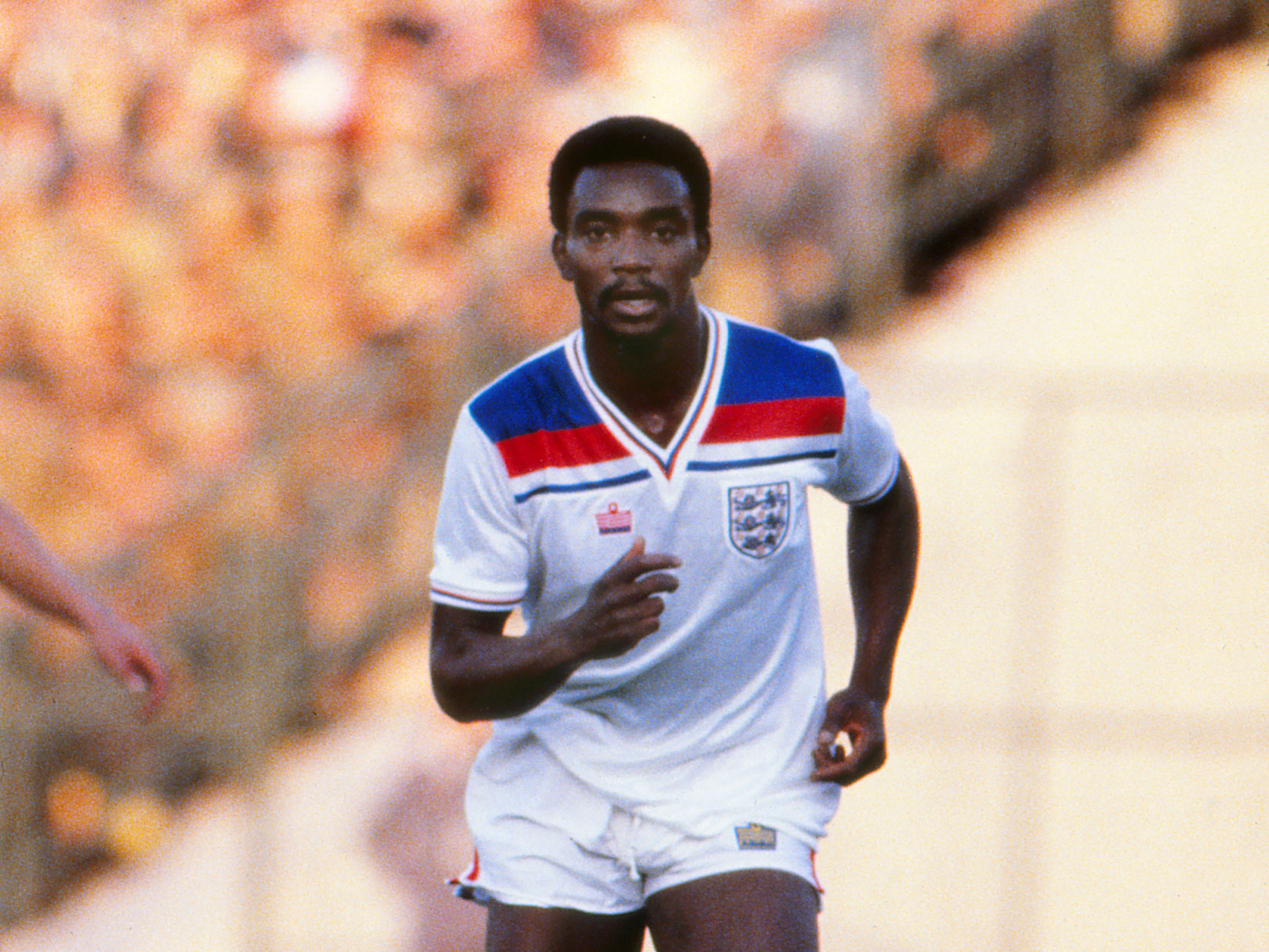
Laurie was placed beneath that stone far, far too early. Laurie Cunningham’s world stopped spinning at the age of 33 and 1/3, somehow appropriate for a man who started a revolution. When news reached this country, it chilled the bones of those who had seen him play, particularly his contemporaries who suddenly lost a part of their youth and were slapped in the face by a taste of their own mortality. Cyrille Regis remembered that well.
“We stayed in touch after he left the Albion. We’d talk regularly on the phone, I went out to Spain to see him a few times, we’d have holidays together and he was always great company. I think the last couple of years he’d started enjoying his football to the full again because those pressures had fallen away and he could just play, so it was even more tragic to hear that he’d gone.
“I’d been talking to him two or three days before it happened, then on the Saturday morning, when I got back home after pre-season training, I got a phone call to say he’d died in a car crash. It was a body blow, those sort of things are very hard to comprehend at the time they happen. His death had a huge impact on me because we’d been close, close friends and to a degree, we’d had parallel lives up to that point, in terms of breaking down racial barriers, playing at the top level. I reassessed my own life from there and I went through some important changes of my own.”
It was sadly ironic that Cunningham should be stolen away at a point when he had escaped most of the pressures that had besieged him throughout his football career, just as he was embarking on a final few seasons where he could get back to the simple enjoyment that had characterised his early performances for Orient and, initially, Albion. Life was rarely that simple for Laurie because he was always a symbol of something, right from the moment he became the first player to represent England at under-21 level in 1977.
That inspired a generation, including a young Londoner called Kevin Campbell: “Laurie was a player that I always admired as a kid. He was so smooth, so quick across the ground. He’s always going to be one of the greats, one of the idols from that era, a part of the Three Degrees here at West Brom, and he did a lot to break down barriers for black players, because he really was part of the first big wave coming into the game. And he was so exciting, that was what made it special. He could do anything with the ball and he made defenders look stupid. He was the kind of player everybody wanted to be.”
Life on the crest of that wave was not always a bowl of cherries, though there was plenty of fruit to be had as crowds bated him with bananas and monkey chants – such sophistication. In truth, the fruit bowl was more a goldfish bowl, and it was a lonely existence, particularly for one who felt his responsibilities keenly and who wore those responsibilities on his sleeve. The fact that perhaps his greatest football was played at The Hawthorns is in no small part because it was here that he enjoyed support from his colleagues, not least two men who were in Laurie’s boat – Brendon Batson and Cyrille Regis.
“I was very lucky,” said Cyrille. “I had a very close relationship with Laurie, mainly because we went through a lot of the same things together. For two years at the Albion we were inseparable, both young boys, having just come up from London, single lads, and we stuck together through what was a very exciting period, but also a time where we were suddenly in the public eye, from nowhere.
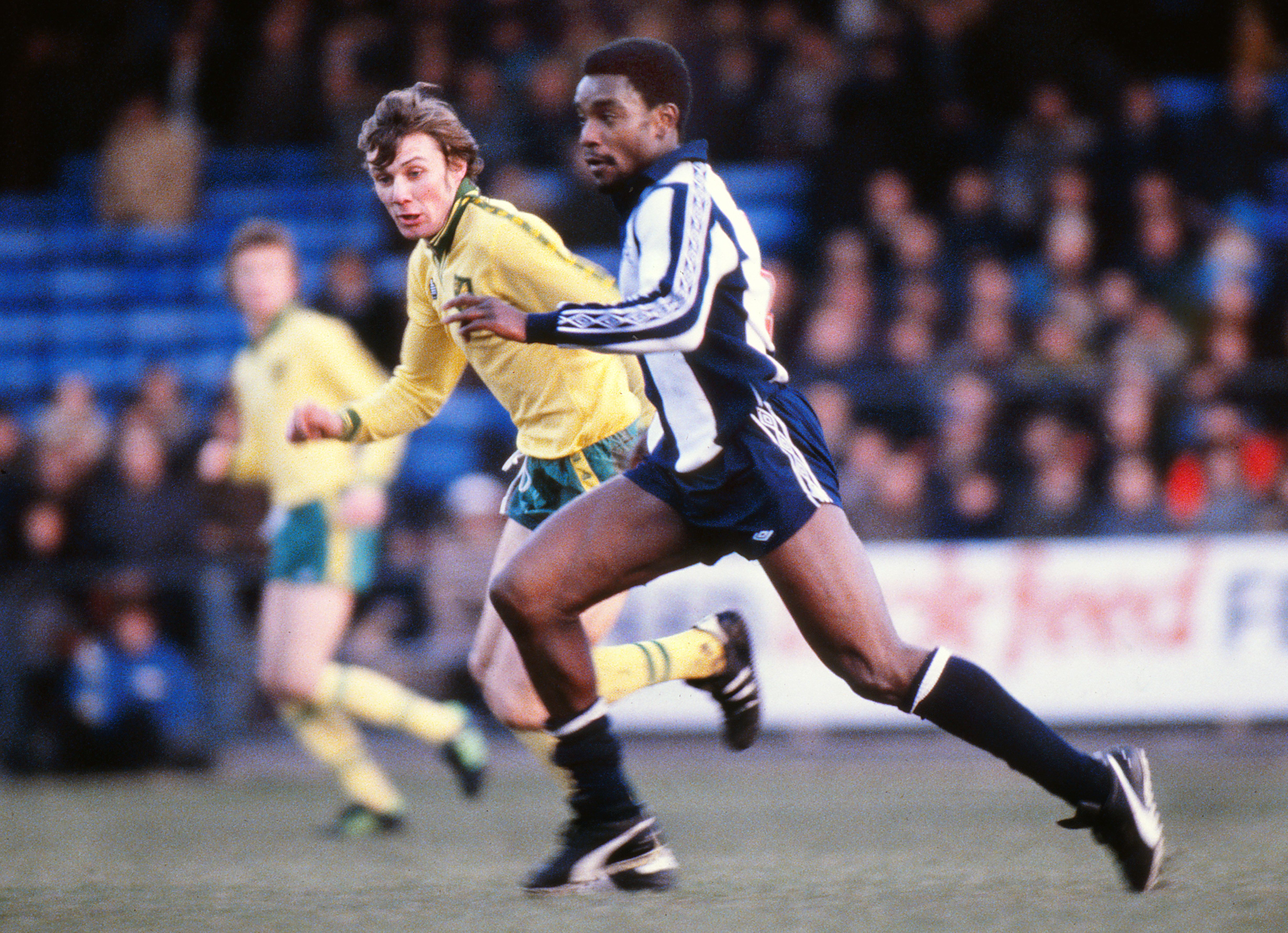
“There was such a lot of focus on us, and then Brendon too, the whole Three Degrees thing, the fact that we were at the forefront of that first generation of black players, and I think we were all lucky that we had one another, we had somebody else who understood what we were going through. Back then, there wasn’t the support network that players have now, the way you have agents and people around you, so we acted as our own support network if you like. And you have to pay credit to the rest of the team as well, the manager too, because they were always behind us, they were always supportive and that was very important.”
Bryan Robson was part of that dressing room, and he has fond memories of Laurie. “Laurie was a very good friend of mine and I spent a lot of time with him and Cyrille when we were players here. He was a smashing player, he had incredible touch on the ball, total control of it, a very good athlete, terrific pace, quick enough to get out of trouble. The performance he gave in Valencia is one that everyone who saw it will remember for a long, long time. To get a move to Real Madrid says it all about him really, because to go there, at that time when they weren’t buying players from this country, you’d got to be something special.”
It always comes back to Valencia and to Real Madrid, Spanish sides from a nation where his destiny was made and his fate sealed. When Albion were pitted against Valencia in the 1978/79 UEFA Cup, it was like playing the likes of Real Madrid or Barcelona today – a great draw, big experience, inevitable beating. Valencia were led by Mario Kempes, the man who had won the World Cup for Argentina the previous summer. But out in Spain, Laurie eclipsed him as he played Kempes and his team off the park with a compelling display of virtuosity, as Cyrille recalled: “The abiding memory of Laurie as a footballer still has to be that game. He gave a near perfect right winger’s performance that night. Everything he touched came off, he made the right decisions time and again for 90 minutes, took people on at the right time, played one touch at the right time, scored a goal, he had a real ten out of ten game, and that was the night that changed his life – Real Madrid saw him and they wanted him from there.
“I wish he’d stayed at the Albion a little bit longer because that side we had in 1978/79 never got the chance to mature that bit further. But when Real Madrid come to sign you, you can’t turn them down. He’d just turned 23, he was on his own in a new country, because back then there weren’t any agents or advisors to help him out, and he found it difficult at times. He started well but then he had a bad injury to his foot which really hampered him and from there on, he was never quite the same again because in trying to get back, he picked up one injury after another.
“Nowadays, there’d be a whole lot of people telling him not to rush back, he’d have an interpreter, a lawyer dealing with the club on his behalf, helping things go smoothly. But back then, it was Laurie on his own, at a club who’d paid a lot of money for him and wanted him out on the pitch. Football has moved on, there’s a much better understanding of the difficulties that players face when they move abroad. That wasn’t around then, and Laurie had to fend for himself.”
Legend has it that Laurie’s spell in Spain was catastrophic, but that’s simply not true. He won the Spanish league and cup double in his first season, played against Liverpool in a European Cup final the following year, and was a cup winner again in 1982. Injury problems – exacerbated by Laurie, a devoted dancer, being caught on the dance floor of a Madrid disco while he was supposed to be convalescing with a toe injury – caused Real’s patience to run out and Laurie embarked on a few seasons of confusion, veering from one club to another, even having a brief spell under his former Albion boss Ron Atkinson at Old Trafford. Atkinson is rapturous in his appreciation of Laurie Cunningham, calling him, “A wonderful, wonderful player. My saying about him was that he could run on snow and he wouldn’t make an imprint. He never quite made the most of that talent for various reasons, which was sad.”
Whatever the final statistics, they matter little. Laurie was a prodigious talent and he was generous enough to share the best of it with us, here at The Hawthorns. Like a lot of flair players, some short-sighted managers tried to shackle him, trying to shoehorn him into a system, madness for a player to whom systems meant nothing. Get him fit, get him ready, get him the ball and get him going. That was all you had to do with Laurie Cunningham and we knew it. Even Cyrille Regis, a man who scored more unbelievable goals than most for the Baggies, was left to wonder at some of the things Laurie could do.
“He was an incredible player, graceful, balletic in his movement, so stylish, so easy on the eye, great control of the ball, pace, everything you need. He was definitely one of the most watchable players in terms of the way he moved, the things he tried to do, his touch, his awareness. He was very exciting, he had people out of their seats all the time.
“He had such huge potential and it’s sad to think that he never quite reached the full extent of what he could have achieved. He’s still one of the very best players you could ever have wished to see but if he’d really done everything he could in the game, he would have touched some incredible heights. You’d watch him run, he’s so graceful, there didn’t seem to be any effort. That was Laurie, he looked like he was floating above the ground.”
Close your eyes and you can see him still, floating above the ground. Rest easy, Laurie.
Written by Dave Bowler, West Bromwich Albion Club Historian