1966, a glorious year, the year of the cup win, when the nation stood still, spellbound as England reigned supreme – and when I say England, of course I mean the archaic term of Albion, for 1966 was the year we carried off the League Cup. Who did you think I meant?
The Football League Cup was instituted in 1960/61, largely to take advantage of the fact that clubs had installed floodlights en masse over the previous decade and so wanted to stage midweek evening fixtures to put them to good use.
Not everybody was thrilled at this new development and quite a few clubs didn’t bother to enter. We were one of them, along with Arsenal, Tottenham, Wolves and Sheffield Wednesday. This boycott grew to the point where 10 clubs missed out in 1964/65, whereupon the Football League decided to take action. A place in the Inter-Cities Fairs Cup would be offered to the winners as an attempt to increase participation. It did. By one. Us.
The competition provided some wild nights. Some 41,188 turned out to see us play Walsall for the first time in a competitive fixture since 1900, Albion winning 3-1. We won 4-2 at Leeds United, one of the more remarkable cup wins in a remarkable cup fighting decade. We turned Coventry over, 6-1 in a replay, Jeff Astle netting our first League Cup hat-trick. Then in the quarter-final, another crowd over 40,000 at The Hawthorns saw us beat the Villa 3-1. A Tony Brown hat-trick helped us see off Peterborough United 6-3 in the two-legged semi-final, and we were in the final.
Not at Wembley in those days, but midweek games, home and away. The luck of the draw favoured us, and we were away in the first game, on March 9, at West Ham United.
West Ham were going through a purple patch at the time, winners of the FA Cup in 1964 and the European Cup Winners’ Cup a year later. They were the side that included Bobby Moore, Martin Peters and Geoff Hurst, who would go on to do quite well later that year with England. But we were the side that included Jeff Astle and John Kaye up front, Clive Clark down the left, as well as ‘goal-boy Brown, the midlands’ Jimmy Greaves’.
The first tie at the Boleyn Ground meant that the Throstles had to ensure that they were not simply blown out of the tie on the back of a raucous East End evening. Already missing the injured Sir Robert Hope, the cause was hardly helped when stalwart centre-half Stan Jones went down injured, elevating 20-year-old Danny Campbell to the colours for a first team debut. With Ray Fairfax at left-back, Graham Williams moved to left-half as Albion set up a 4-3-3 formation that the press condemned as “an unentertaining but thoroughly effective method of blocking West Ham” and “a defensive style and system foreign to their usual attacking approach”.
Albion were portrayed as building a “human wall” in front of goal in order to frustrate the Hammers and their fans, an approach that bore plenty of fruit. Striker Johnny Byrne was booed mercilessly throughout by his own fans and even Moore was subjected to the bird as West Ham’s attacks persistently ran aground against a well marshalled Albion rearguard.
It was to get worse for them just before the hour when the Throstles hit them on the counter-attack. Clive Clark, who had two goals ruled out for offside on the night, squared the ball for Astle, playing his first game for three months after a cartilage operation, to smash into the net. Such was our command and West Ham’s lack of invention that it looked as if the game might already be up, but in the 70th minute, luck turned the way of the hosts. Moore took a throw-in on the left, collected a return pass from Brian Dear, and immediately swung in a cross from the touchline, some 30 yards out. The ball dipped and swerved, left Ray Potter in the Albion goal stranded, and snuggled down inside the far post to give the Hammers an equaliser.
Momentum is central to any football match and it was clearly with West Ham now, but Albion held firm and looked to be bringing a draw back to God’s country before controversy seized the moment as the game entered its final breath. West Ham won a corner which Dear appeared to miskick, rolling the ball outside the quadrant, then playing it again before another player touched it. After combining with Denis Burnett, Dear flashed the ball into the box, Albion complaining that a West Ham forward handled it on its way, before finding Byrne standing alone, five yards out, to silence the boos by hammering in the winner – but only on the night.
The mood among the Albion players as they got on the bus to go home that evening was one of confidence. Had they been offered a 2-1 defeat before a ball was kicked, they surely would have taken it, and such was their self belief when taking on all comers at The Hawthorns that they felt they were now red hot favourites to win the cup when the return took place a fortnight later, March 23 1966.
League form was indifferent between the ties, Albion drawing at Stoke and losing at home to Burnley, but all eyes were now on the trophy the club had hitherto treated with disdain. With Hope back from injury, Lovett stepped down from the side that had played at Upton Park, adding further reasons for optimism to the mix.
At this distance, it seems bizarre that with Albion on the brink of collecting silverware in our own back garden only 32,013 supporters turned up at The Hawthorns for the final, especially given the 41,188 that had been here for our second round tie with Walsall. But if the Throstletariat were underwhelmed by the League Cup, the players had more than enough enthusiasm to make up for it.
“I’ve never been in a dressing room like it,” recalls Tony Brown. “We were so fired up for that game, we were virtually kicking down the door, just desperate to get out there and get after them. I don’t think I ever saw us so determined or so confident. And when we got out on the pitch, we just tore them to shreds, they didn’t know what had hit them. First half, it was probably the best Albion performance I was ever involved in”.
It was a game where the superlatives tripped off the tongues of the attendant pressmen: “Jimmy Hagan’s Ironsides set the Black Country skies aglow...playing football with a poise and panache the Midlands have long despaired of achieving”. Albion grabbed the game by the throat at the outset and were 2-0 up on the night, and 3-1 ahead on aggregate, inside 18 minutes. Kaye scored the first, whipping in a ferocious right foot shot from the edge of the box, Brown nodding in the second from a neat lobbed pass from Bobby Cram.
At such a moment, some sides might have wondered whether or not it would be prudent to stick, and see the game through to a serene clean sheet before collecting the cup. Not Hagan’s Albion. With the Hammers on the floor, we placed the sole of the boot upon the windpipe and applied some further pressure. After 27 minutes, it was 3-0 when Clark showed his searing pace to beat Standen to a ball that looked as if it belonged to the ‘keeper, Clark almost heading it out of his hands and into the net as Standen embraced thin air. In the 35th minute, the cup was all but ours as skipper Graham Williams thrashed in a 30 yard shot which flew in off the post. West Ham somehow held it together until the break, but at 5-2 up, Albion were not going to relax their grip on the League Cup.
The storm had blown itself out and, unsurprisingly, after giving so much through the first 45 minutes, the Throstles could not touch those lofty standards again in the second period. There was little need though, for the deed was done and it was enough to keep the Hammers at arm’s length through the remaining 45 minutes. Brabrook hit the post for the visitors before, with 15 minutes to go, Peters arrived on the scene to nod in a John Sissons cross and raise late hope for his team. But Albion were merely toying with them by this stage, upping the ante again shortly afterwards when a rasping Kaye drive hit the bar and skidded over.
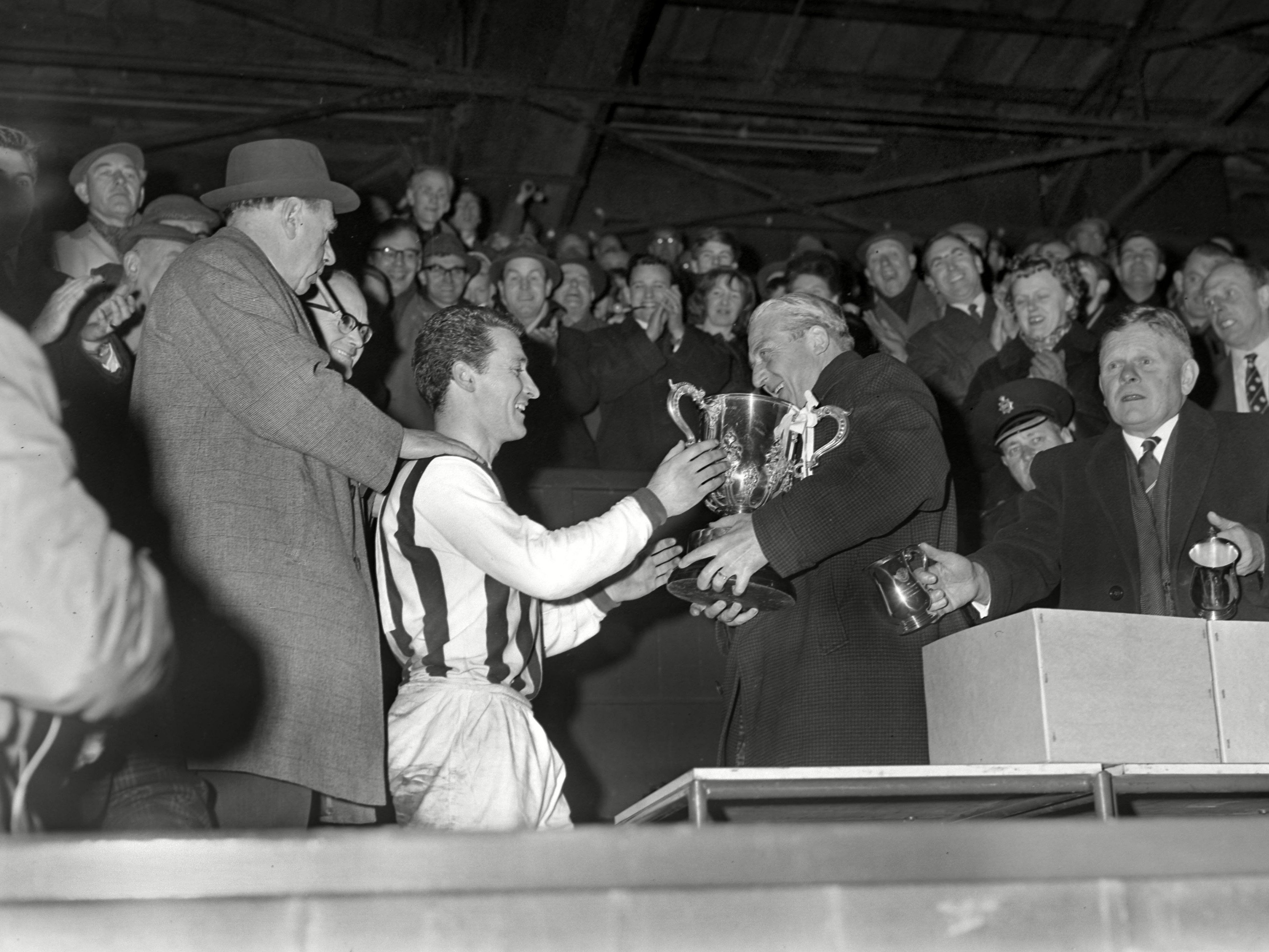
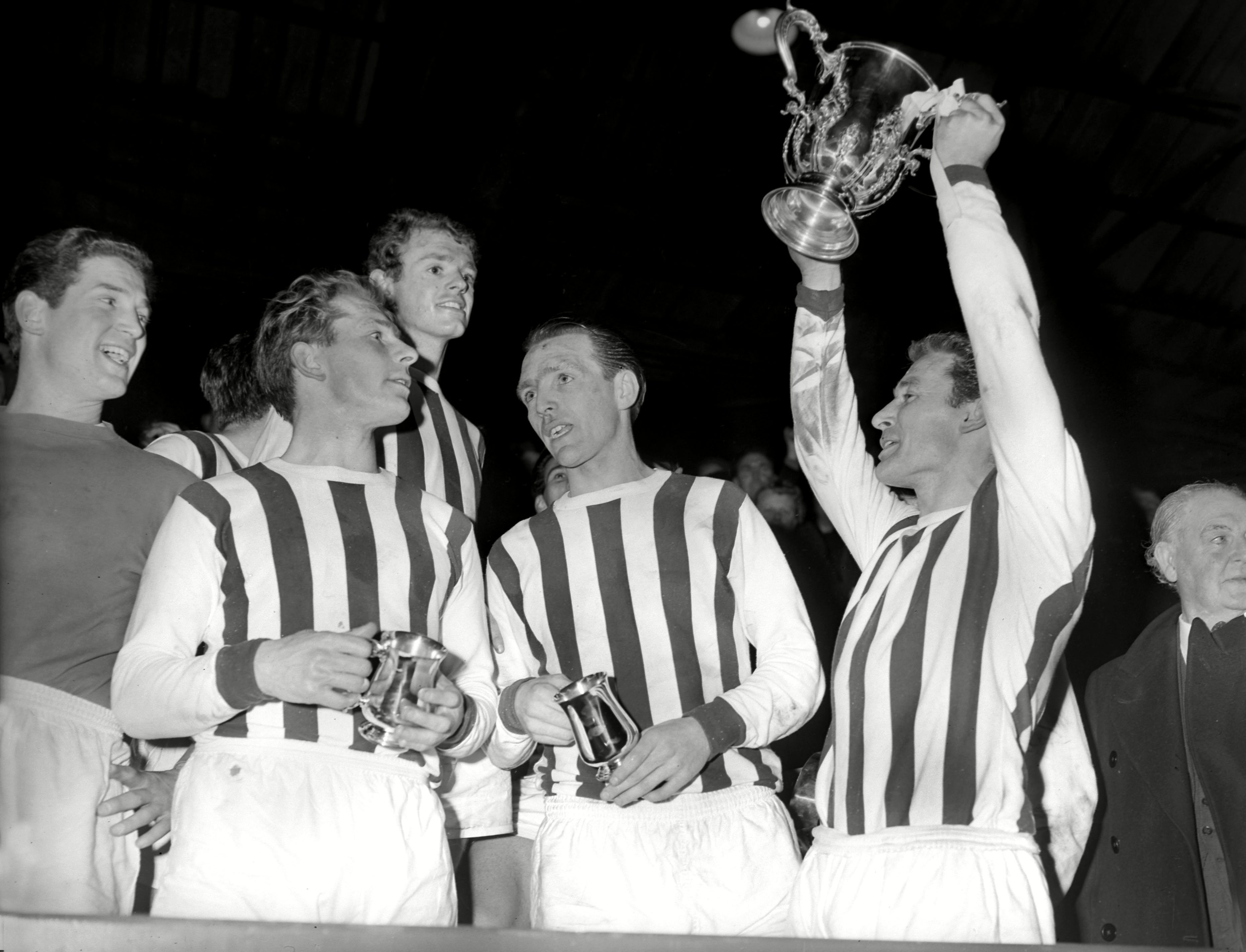
And so it was over. Albion had collected our fifth senior cup to go along with the four FA Cup triumphs we had mustered. Graham Williams led his players into the Halfords Lane Stand to collect the cup and the accompanying winner’s tankards that went the way of the players, chairman Jim Gaunt celebrating with gusto as Williams held the trophy aloft.
There was something peculiarly satisfactory and undeniably special after winning the cup on your own ground, but it did lack the glamour of the big Wembley occasion. The Football League would remedy that he following season, adding lustre to their competition by creating a Saturday Wembley showpiece. We need not worry about how that went…
Written by Dave Bowler, West Bromwich Albion Club Historian