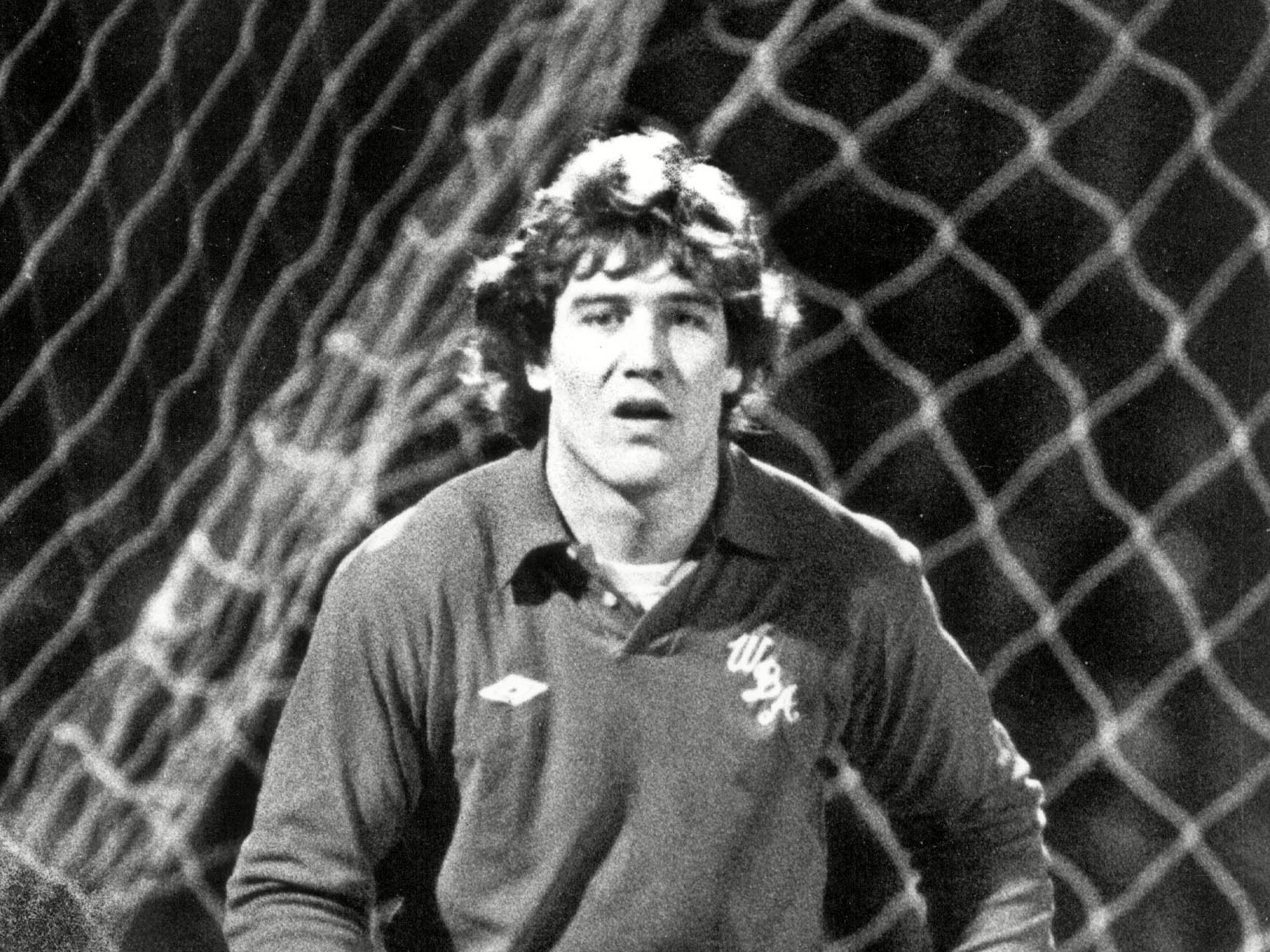
It’s often the lot of the goalkeeper to be the unsung hero of a football team. When you are the goalkeeper behind what was, by any measure, Albion’s best side of the last 50 years, a team that played football so thrilling it could make Pele and Cruyff blush, what chance have you got, especially when you get to make your Albion debut on the same day that we first unleashed Laurie Cunninghan on the First Division.
That was the hand dealt to Tony Godden who, in addition to all of that, had to live up to being John Osborne’s successor. That he did so in such impressive fashion says plenty about a goalkeeper who resides among the finest of our post-war custodians, just shy of Osborne and Ben Foster perhaps, but right up there in the conversation about the best of the rest.
Born in Gillingham, Godden came to us as a youngster from Ashford. Recognising his talent, then manager John Giles farmed him out on loan to Preston North End where on the coaching staff was Alan Kelly. Kelly, whose name adorns one of the Deepdale stands, was a fine goalkeeper and Giles’ assistant with the Republic of Ireland. In a time before goalkeeping coaches, Giles realised that a spell working with Kelly was going to sharpen the skills of the young TG, to the point where he was ready to anoint him as Ossie’s successor.
Towards the end of his second and final season at The Hawthorns, Giles decided that Godden, 21, was ready. As we travelled to White Hart Lane on March 12 1977, Godden was given the number 1 shirt for the first time. He kept a clean sheet but, as noted, everybody was looking the other way, at the feet of the sorcerer that was Laurie Cunningham. Four days later, he made his Hawthorns bow. Against Ipswich Town, he posted another clean sheet. At the opposite end, Bryan Robson scored a hat-trick and Cunningham got his first Albion goal. You get the picture.
Godden had a run of six games before Osborne returned, four wins and two draws for the Throstles. By the end of that sequence, TG had become Osborne’s heir apparent and although Giles left that summer, he was now the man in possession.
The 1977/78 season started with Ronnie Allen as manager. On the opening day, August 20 1977, we beat Chelsea 3-0 at The Hawthorns, Tony Godden between the sticks. That was the start of a frankly ridiculous run of 228 consecutive appearances that did not end until November 7 1981 when, ironically, Godden was missing as we met Tottenham at White Hart Lane. There would still be the better part of 100 games to come for the Albion prior to his departure in March 1986 at the dawn of the Great Sadness, but that run of 228 games was where he built a reputation that remains undimmed.
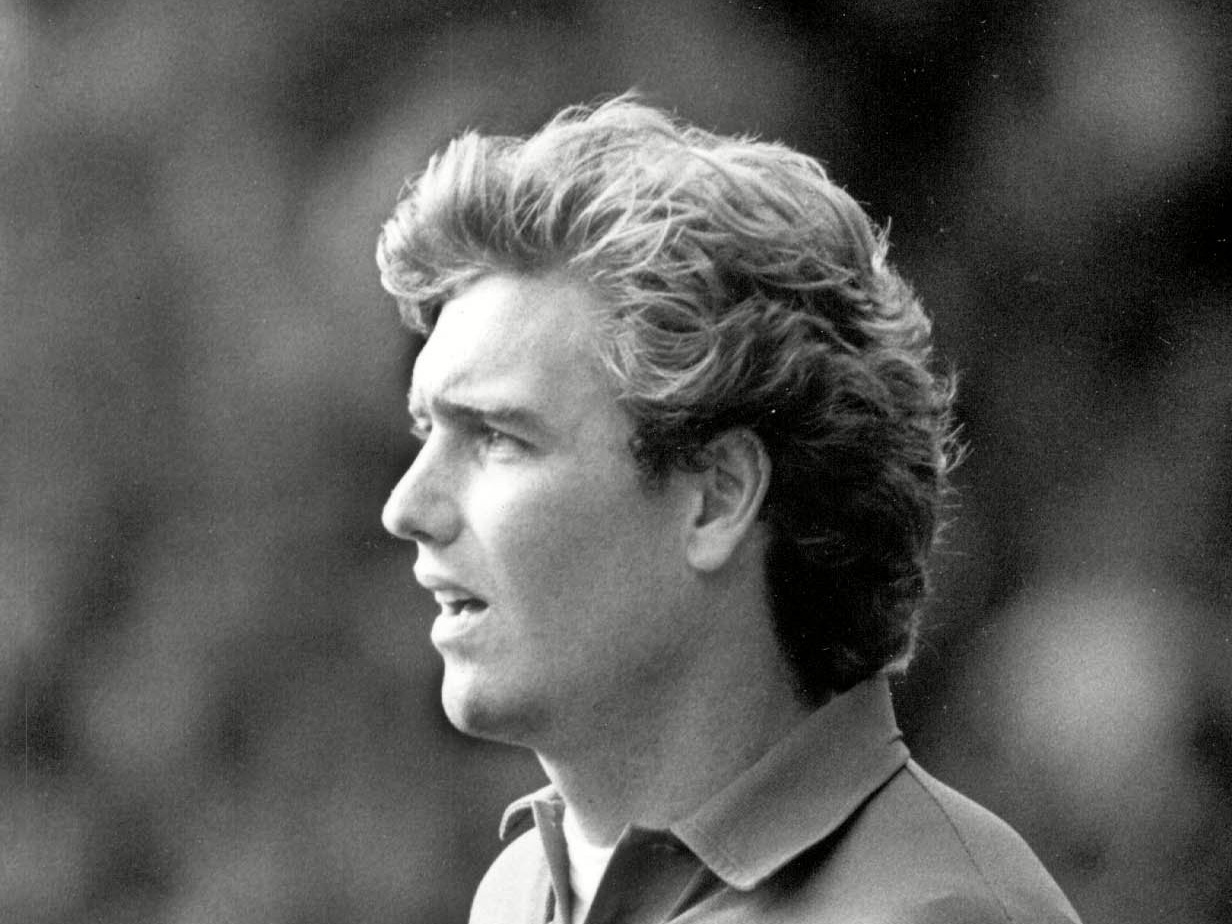
Godden was a goalkeeper at a time when Peter Shilton in particular was changing the physical archetype for the role. Although he was six feet tall, Godden was not the physical giant that Shilton was and that the likes of Schmeichel would be. At the Albion, he did not need to be, for in front of him were invariably John Wile and Alistair Robertson. The three built such an understanding that it verged on the telepathic.
As a consequence, TG got a reputation for being a ‘stay at home’ goalkeeper, but that was not through any deficiency. Instead, it was a reflection of the disparate skills of the trio. If a cross came into the box, you could put your life savings on Wile or Robertson winning the header, so why complicate things by getting in their way? Instead, Godden was bouncing on the balls of his feet, like a tennis player about to receive a Djokovic serve, in a perfect state of readiness to dive in either direction, at any height, and to complete a save that not many others would make – and this in an era when the First Division featured Clemence, Shilton, Jennings, Corrigan, Parkes, Bailey and plenty of other magnificent goalkeepers.
Godden played a big part in the FA Cup run of 1977/78, by which time Ron Atkinson was Albion’s manager. It should not be underestimated just how tough it was to be a goalkeeper in Atkinson’s side either. Giving his side more and more licence to pour forward – “Go and entertain me” – it did inevitably mean that from time to time, Albion would be exposed at the back. On those occasions, Godden was the last line of defence and one that was rarely found wanting.
Like any goalkeeper, he made his mistakes. But like the best of them, he was able to put them behind him. Literally, in the most famous case of them all when, against Liverpool in September 1978, having caught the ball, he started to roll it out, as goalkeepers had to in those days. What he hadn’t noticed was that Kenny Dalglish was behind him, the Scot needing no further invitation to pop the ball into the gaping goal. Typical of the abiding sensitivity that footballers have for one another’s fragile mental health, in the dressing room later in the week, Godden was presented with a goalkeeping cap that had wing mirrors attached to the sides.
He took it in good part and, underlining the resilience of his character, three months later, in that same Birmingham Road end goal, Godden produced a save that defied description to deny Valencia’s Mario Kempes a goal and put Albion on course for the win that helped define that team. It’s as much a signature moment of that Albion side as Tony Brown’s volley that night or Laurie Cunningham drifting over the Old Trafford turf. Because while the talk of that side will be forever of Regis, Cunningham, Statham, Robson, Tony Godden was every bit as central to what it achieved as anyone. Great sides are built on solid foundations, and he was that alright.
In the mind’s eye, TG will always be there at the back of that side, clad in that bright red jersey, bowling the ball out into the path of Derek Statham, sending Albion off on another blistering attack. The goalkeeper of that side. That’s some epitaph.
Rest easy, Tony.